
Startup Consultant: What They Do and When You Need One
Starting a business means making dozens of decisions you have never made before. How should you price? Which legal structure fits? What systems do you need? A startup consultant helps you answer these questions with a plan, so you do not have to learn every lesson the hard way.
In this guide, you will learn what a startup consultant does, the signs you might need one, how they compare to a coach or doing it yourself and how to choose the right one for your business. You will also see the red flags to avoid before you sign anything.
Quick Answer
A startup consultant is an expert who helps founders plan, set up and launch a business. They help with your business model, pricing, legal setup, systems, marketing and sales process. You usually need one when you have an idea or a new business but no clear plan or structure behind it.
What Does a Startup Consultant Do?
A startup consultant guides you through the work of turning an idea into a business that runs. Some only give advice. Others roll up their sleeves and build parts of the business with you. Either way, their job is to help you avoid costly mistakes and move faster with a clear plan.
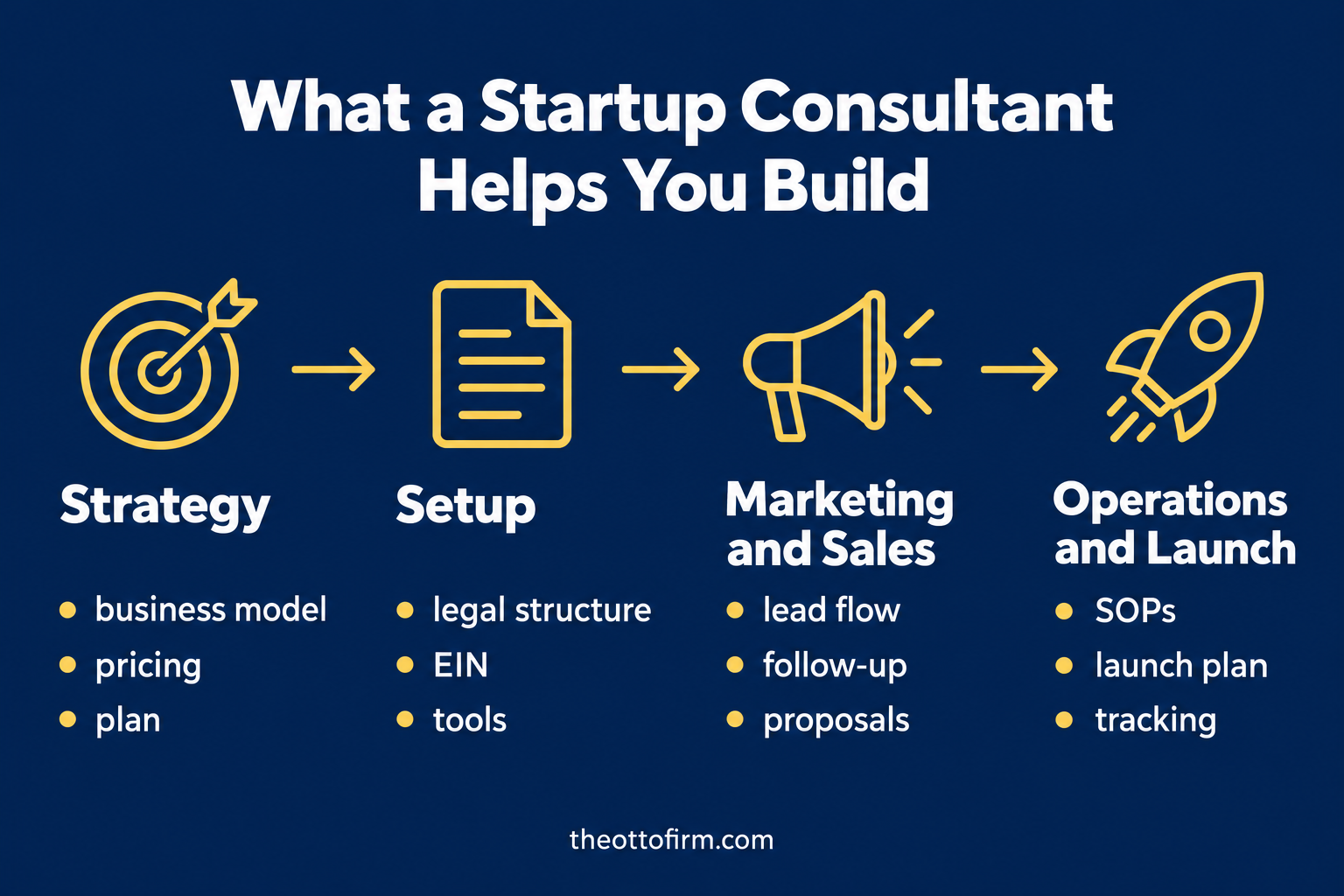
Most of their work falls into four areas.
1. Strategy and planning
They help you shape your business model, which is how you make money: what you sell, who buys it and how you deliver it. They also help with positioning, pricing, goals and a simple business plan you can actually use.
2. Business setup and infrastructure
They guide you through the basics, such as choosing a legal structure, registering your business and getting an EIN (Employer Identification Number), which is a tax ID for your business. Many also help you set up the tools a business needs: a CRM (customer relationship management system), email, payments, contracts and bookkeeping.
The U.S. Small Business Administration explains the core setup steps in its 10 steps to start your business guide. Legal and tax choices depend on your situation, so a good consultant will also tell you when to bring in a licensed CPA or attorney.
3. Marketing and sales systems
A consultant can help you decide how customers will find you and what happens after they reach out. That often includes a sales pipeline, the stages a lead moves through from first contact to paying customer, plus follow-up, proposals and onboarding.
4. Operations and launch
Finally, they help you write SOPs (standard operating procedures), which are step by step guides for repeat tasks. They also help you plan your launch and set up simple ways to track results.
What a startup consultant helps with at each stage
Your stage | Common challenge | How a consultant helps |
|---|---|---|
Idea stage | No clear plan or offer | Tests the idea, shapes the offer and builds a launch plan |
Newly formed business | Paperwork done, but no systems | Sets up the tools, processes and sales flow |
Growing business | Owner doing everything, growth feels chaotic | Finds bottlenecks, writes processes and builds systems that scale |
Signs You Need a Startup Consultant
Not every founder needs outside help. But these signs suggest a consultant could save you time and money:
You have an idea but no clear plan. You know what you want to sell but not how to turn it into a business.
You formed your business, but nothing happens. You have an LLC and a logo, but no steady customers.
You are juggling too many vendors. A designer, a web developer and a marketer each do their part, but nobody sees the whole picture.
You do everything yourself. Every question and task comes back to you.
Leads come in but do not turn into clients. Your follow-up or sales process has gaps.
You are about to make a big decision. Hiring, raising prices or launching a new service is easier with an expert view.
Startup Consultant vs Business Coach vs Doing It Yourself
Option | Best for | What you get | Main tradeoff |
|---|---|---|---|
Startup consultant | Founders who need a plan and hands on help building the business | Expert guidance, a clear roadmap and often help setting up systems | Usually costs more than coaching |
Business coach | Owners who know what to do but need accountability and mindset support | Regular sessions, encouragement and accountability | Coaches usually guide you rather than build systems for you |
Doing it yourself | Founders with time, experience and a tight budget | Full control and lower upfront cost | Slower progress and more trial and error |
The right choice depends on your budget, your experience and how quickly you need results. Many owners start on their own and bring in a consultant when they hit a wall.
How to Choose the Right Startup Consultant
Step 1: Get clear on what you need
Write down your biggest problem in one sentence. Is it a missing plan, no systems, weak sales or all of the above?
Why it matters: A clear need helps you find a consultant with the right skills.
Mistake to avoid: Hiring someone before you know what you want them to fix.
Step 2: Check their experience with businesses like yours
Ask which industries and business stages they usually work with. A consultant who helps service businesses may not be the best fit for a product company.
Why it matters: Relevant experience means fewer mistakes and faster results.
Mistake to avoid: Choosing based only on a polished website or social media following.
Step 3: Ask how they work
Find out whether they only give advice or also help build systems with you. Ask what a typical engagement looks like, how long it lasts and what you will have at the end.
Why it matters: Clear expectations prevent disappointment later.
Mistake to avoid: Assuming "consulting" means the same thing everywhere. It does not.
Step 4: Ask for a clear scope and deliverables
A good consultant will put the scope, timeline, deliverables and price in writing before you start. Deliverables are the specific things you will receive, such as a business plan, a CRM setup or written SOPs.
Why it matters: A written scope protects both of you and keeps the project on track.
Mistake to avoid: Starting work on a handshake with no written agreement.
Step 5: Start with a conversation
Many consultants offer a free first call. Use it to see how well they listen, whether they ask good questions and whether their advice feels practical.
Why it matters: You will work closely together, so trust and communication matter.
Mistake to avoid: Signing up on the first call because you feel pressured.
Example: When a Founder Brings in a Consultant
This is a made up example to show how the process can work, not a real client.
Marcus has worked in real estate for ten years and wants to open his own brokerage. He has his license and a business name, but no plan, no brand and no system for agents. He hires a startup consultant who helps him shape his business plan, set up a CRM, write onboarding steps for new agents and plan his launch. Instead of figuring it out piece by piece over a year, he follows one clear roadmap.
Red Flags When Hiring a Startup Consultant
Guaranteed results. No honest consultant can promise a specific income or growth number.
No written scope. Vague promises often lead to vague results.
Pressure to sign today. Good consultants give you time to decide.
One plan for everyone. Your business should get advice that fits your stage and industry.
No experience you can verify. Ask for examples of their work and check them.
Frequently Asked Questions
What does a startup consultant do?
A startup consultant helps founders plan, set up and launch a business. They help with the business model, pricing, legal setup, systems, marketing and sales process, so the business is ready to run.
How much does a startup consultant cost?
Costs vary widely based on experience, scope and how hands on the work is. Ask for a written proposal with the scope, timeline and total price before you commit.
When should I hire a startup consultant?
Consider one when you have an idea or new business but no clear plan, when you are doing everything yourself or when leads are not turning into clients.
Is a startup consultant the same as a business coach?
Not quite. A coach mainly offers guidance and accountability. A consultant usually brings a plan and often helps build the systems and processes with you.
Can a startup consultant help an existing business?
Yes. Many consultants also work with established businesses that feel stuck, helping them find bottlenecks and build systems that support growth.
Conclusion
A good startup consultant does not just give advice. They help you see the whole business, avoid expensive mistakes and follow a clear plan from idea to launch.
Before you hire anyone, take a clear look at where your business stands today. Knowing your gaps helps you ask better questions and choose the right kind of help.
At The Otto Firm, we help founders build the strategy, systems and sales process behind their business through a structured 120-day build.
Not sure where to start? Take the free Business Readiness Assessment on theottofirm.com to see your strengths and gaps. You can also book a free strategy call to talk through your next steps.