
How to Write a Consulting Firm Business Plan
Starting a consulting practice requires more than deep expertise in your field. You need a clear roadmap that turns your personal knowledge into a repeatable, profitable company. Writing a comprehensive consulting firm business plan gives you the strategy and operational clarity required to attract corporate clients, secure business financing and scale your operations smoothly.
Whether you are launching a new practice or organizing an existing firm that lacks systems, a structured roadmap helps you avoid wasted time and cash. This guide covers every essential component of a successful strategy, from defining your service offering to building accurate consulting financial projections.
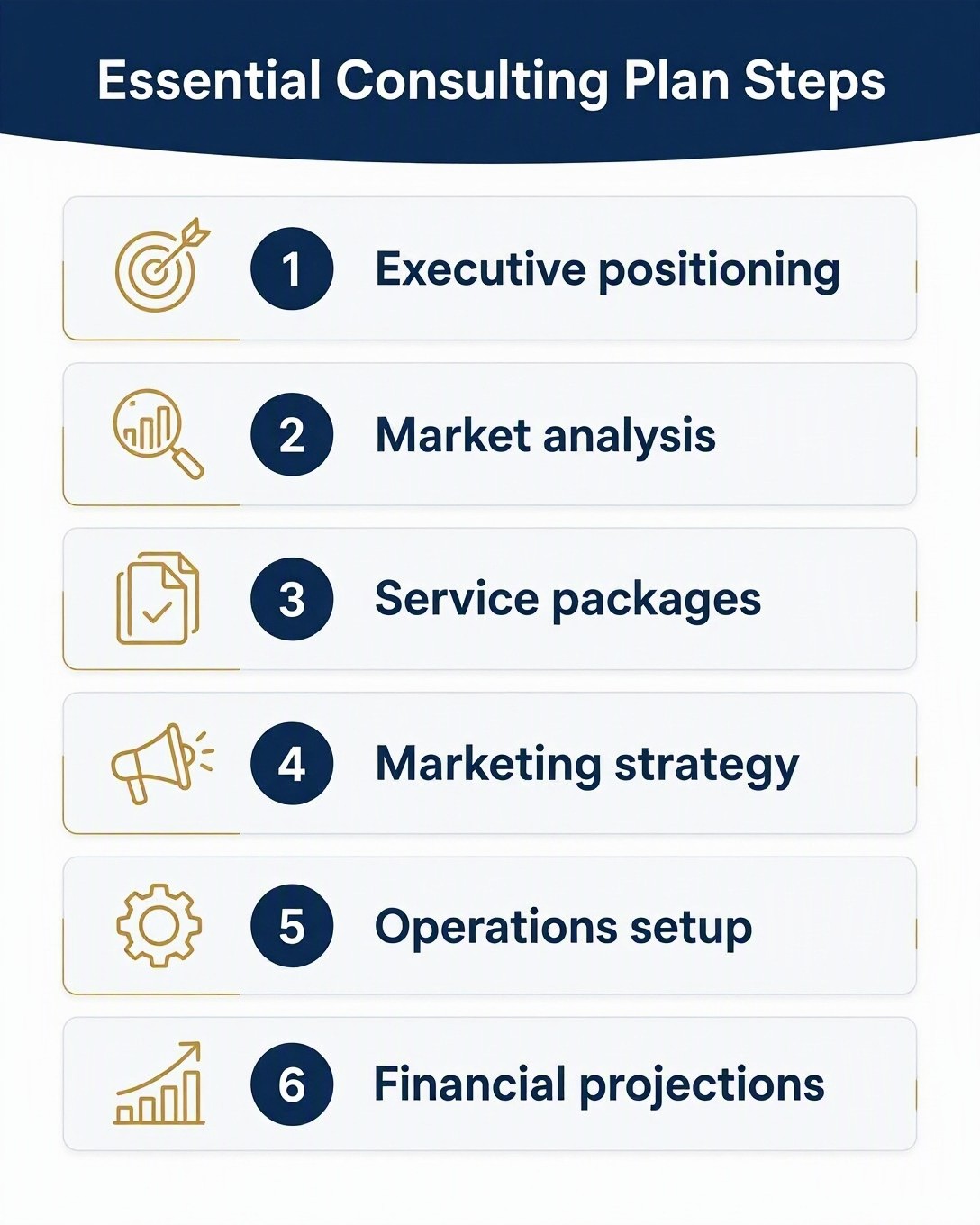
Quick Answer: A complete consulting firm business plan requires six core sections: an executive summary, market analysis, packaged service offerings with pricing, a marketing and sales plan, operational workflows like SOPs and CRM setup, and 3-year financial projections. Focusing on clear brand positioning and precise cash flow planning ensures your firm stays profitable and resilient.
Why Your Consulting Firm Needs a Written Business Plan
Many consultants rely solely on networking and word of mouth when starting out. While initial referrals can launch your firm, relying on unstructured growth creates volatile revenue and operational chaos. A formal business strategy establishes clear direction for your firm.
A written strategy helps you clarify your core brand positioning and identify your ideal target market. It keeps you focused on high margin services rather than taking on every prospective client who reaches out. A clear roadmap also outlines your software needs, sales pipeline stages and administrative structure before client volume overwhelms you.
If you plan to seek external funding, commercial loans or business credit, lenders and investors will require a detailed plan. Institutions like the U.S. Small Business Administration expect to see realistic revenue modeling, thorough market analysis and a clear repayment strategy before approving financing.
Step 1: Write an Executive Summary and Define Brand Positioning
Your executive summary provides a high level overview of your firm. Although it appears first in the completed plan, you should write it last after finalizing your operational and financial details. It must summarize your mission, ownership structure, core services and primary growth goals in one or two pages.
In this section, clearly state your legal entity choice, such as a Limited Liability Company (LLC) or C Corporation. Mention key regulatory details, including your Employer Identification Number (EIN) issued by the IRS and state business filings. For Florida entities, registration details through the Florida Division of Corporations should be documented here.
A strong executive summary emphasizes your firm brand positioning. Explain what sets your advisory practice apart from generalist competitors. Whether you specialize in real estate operations, tax practice workflows or marketing agency scaling, define the specific outcome you deliver to buyers.
Step 2: Conduct a Market Analysis and Competitive Assessment
A thorough market analysis proves there is sufficient demand for your consulting services. Start by defining your target market with specific demographic and firmographic data. Detail the size of your target industry, annual revenue thresholds, typical employee counts and geographic locations of ideal clients.
Include a competitive analysis that evaluates direct and indirect competitors. Identify established consulting firms in your niche alongside individual freelancers and internal solutions. Outline their pricing models, core strengths and service gaps.
Synthesize these insights using a classic SWOT analysis (Strengths, Weaknesses, Opportunities and Threats):
- Strengths: Proprietary consulting frameworks, deep industry relationships and specialized technical skills.
- Weaknesses: Limited initial brand awareness, lean staffing and reliance on founder led sales.
- Opportunities: Rising demand for specialized advice, underserved mid market businesses and emerging industry compliance rules.
- Threats: Broad economic downturns, rapid technology shifts and low barrier to entry for independent freelancers.
Step 3: Outline Your Service Offering and Pricing Strategy
Vague service descriptions lead to scope creep and squeezed profit margins. Your business plan must clearly define each service offering, including deliverable timelines and target client outcomes. Structure your solutions into clear service tiers rather than selling unstandardized hourly advice.
Select a sustainable pricing strategy aligned with your market positioning. Common pricing models for advisory firms include:
- Project-Based Pricing: Fixed fees for clearly defined scopes, such as an operational audit or CRM implementation.
- Monthly Retainers: Ongoing advisory support or execution for a fixed monthly fee, providing predictable recurring revenue.
- Value-Based Pricing: Fees tied directly to the measurable financial impact or revenue increase created for the client.
Document your service delivery framework step by step. Standardizing how you onboarding clients, execute assessments and present strategy recommendations ensures consistent service quality as your client list grows.
Step 4: Build a Marketing Plan and Sales Pipeline Strategy
A great service offering requires a proactive client acquisition system. Your marketing plan details how you will generate qualified leads and convert them into high value contracts. Relying strictly on personal referrals leaves your pipeline vulnerable during slow market cycles.
Identify your primary lead generation channels. Effective channels for consulting firms include targeted LinkedIn outreach, strategic content publishing, speaking engagements and joint ventures with complementary service providers. Specify how your marketing activity drives prospects into your sales pipeline.
Define your sales conversion process from initial contact to signed proposal. Outline the discovery call structure, assessment phase, proposal presentation and contract signing steps. Implementing a dedicated CRM ensures you track pipeline stage metrics and follow up with prospective clients consistently.
Step 5: Establish Operational Infrastructure and SOPs
Consulting practices often struggle with backend efficiency. Your operational plan details the tools, systems and workflows required to run your practice professionally. Without clear infrastructure, firm owners spend valuable time on administrative tasks instead of billable client strategy.
Document your internal technology stack and standard operating procedures (SOPs). Your operational setup should address several functional areas:
- Client Management: A client portal for file sharing, communication and project milestone tracking.
- Sales and Operations Software: Integrated CRM software, proposal tools and electronic signature systems.
- Financial Systems: Automated invoicing tools, dedicated business bank accounts and daily bookkeeping workflows.
- Legal Protection: Standard service agreements, statement of work (SOW) templates and non disclosure agreements (NDAs).
Always confirm tax, legal or financing details with a licensed CPA, tax professional or attorney for your specific situation.
Step 6: Create Realistic Consulting Financial Projections
Your financial section translates your strategic strategy into dollars and cents. Building realistic consulting financial projections allows you to monitor cash flow, establish revenue targets and manage operational expenses prudently.
Develop a comprehensive three year financial model that includes three core statements:
- Income Statement (Profit and Loss): Outlines projected gross revenue, cost of goods sold (such as subcontractor costs) and fixed operating expenses.
- Cash Flow Statement: Tracks the movement of actual cash entering and leaving your bank account, highlighting seasonal lulls or delayed client payment terms.
- Break-Even Analysis: Calculates the exact revenue volume required to cover fixed overhead costs and founder salaries.
List your revenue assumptions clearly. Factor in sales cycle lengths, client churn rates, average retainer tenure and payment collection timelines. Maintaining a 90 day cash buffer helps cushion your firm against delayed corporate payments.
Consulting Business Plan Example Checklist
To ensure your strategy covers all necessary elements, compare your draft against this comprehensive structural example:
| Plan Section | Key Elements Included | Primary Goal |
|---|---|---|
| Executive Summary | Mission, business structure, EIN status and brand positioning | Summarize core business strategy for stakeholders |
| Market Analysis | Target market profile, competitive assessment and SWOT analysis | Validate demand and differentiate service offer |
| Services and Pricing | Packaged service offerings, deliverables and pricing model | Prevent scope creep and optimize profit margins |
| Marketing and Sales | Lead generation channels, CRM workflow and sales pipeline | Establish predictable client acquisition systems |
| Operational Plan | SOPs, client portals, billing setup and legal contracts | Ensure consistent backend delivery and efficiency |
| Financial Projections | Income statement, cash flow statement and break even analysis | Ensure long term financial health and funding readiness |
Execution Pitfalls to Avoid
Creating a plan is only the first step; execution determines your firm success. Many consultants fail because they treat their business plan as a static document created solely for bank approval. Review and update your strategy quarterly to reflect real market feedback and revenue metrics.
Another common mistake is underestimating administrative overhead and sales ramp up times. Consulting sales cycles can take 30 to 90 days from initial contact to contract signing. Your cash flow model must reflect these lag times so your business remains solvent during launch.
If you are building your advisory practice while handling daily client work, getting an objective expert evaluation can save you months of trial and error. Utilizing a proven consulting firm business plan template or working alongside experienced operational advisors helps turn strategy into executed systems quickly.
To evaluate whether your practice has the backend infrastructure and systems ready to launch or scale, take The Otto Firm Business Readiness Assessment. You can also schedule a free strategy call to discuss building your foundation, marketing pipeline and operational launch.
Frequently Asked Questions
What is the most important part of a consulting firm business plan?
The service offering and pricing strategy section is critical. It defines your core value, target margins and deliverable scope, preventing scope creep while ensuring steady cash flow.
How long should a consulting financial projections model extend?
Financial models should cover 3 to 5 years. Year one should show monthly breakdowns, while years two through five can show quarterly or annual summaries.
Can I use a free sample business plan for a consulting firm?
A free sample business plan for consulting firm practices provides a basic outline. However, you must customize your target market, pricing strategy and operational SOPs to match your specific niche.
How do I write a consulting firm business plan with no historical revenue?
Base your initial projections on primary market research, direct industry benchmarks and conservative sales assumptions. Focus heavily on your lead acquisition strategy and cash runway management.
Conclusion and Next Steps
A well researched consulting firm business plan serves as your tactical roadmap for sustainable growth. By defining your target market, packaging your expertise, building sales infrastructure and monitoring financial projections, you transform personal expertise into a scalable business asset.
Take time to review your strategy, establish your operational workflows and ensure your financial assumptions are grounded in reality. When you establish solid infrastructure early, your consulting firm builds the resilience needed to acquire clients, manage cash flow and scale efficiently.