
Business Startup Checklist: 12 Steps to Launch Your Business the Right Way
Starting a business is exciting. You have an idea, energy and a goal. But excitement alone does not build a business that lasts.
Many new businesses struggle not because the idea is bad, but because the basics were skipped. The paperwork was rushed. The money was mixed with personal accounts. There was no system to follow up with leads. Small gaps like these turn into big problems a few months later.
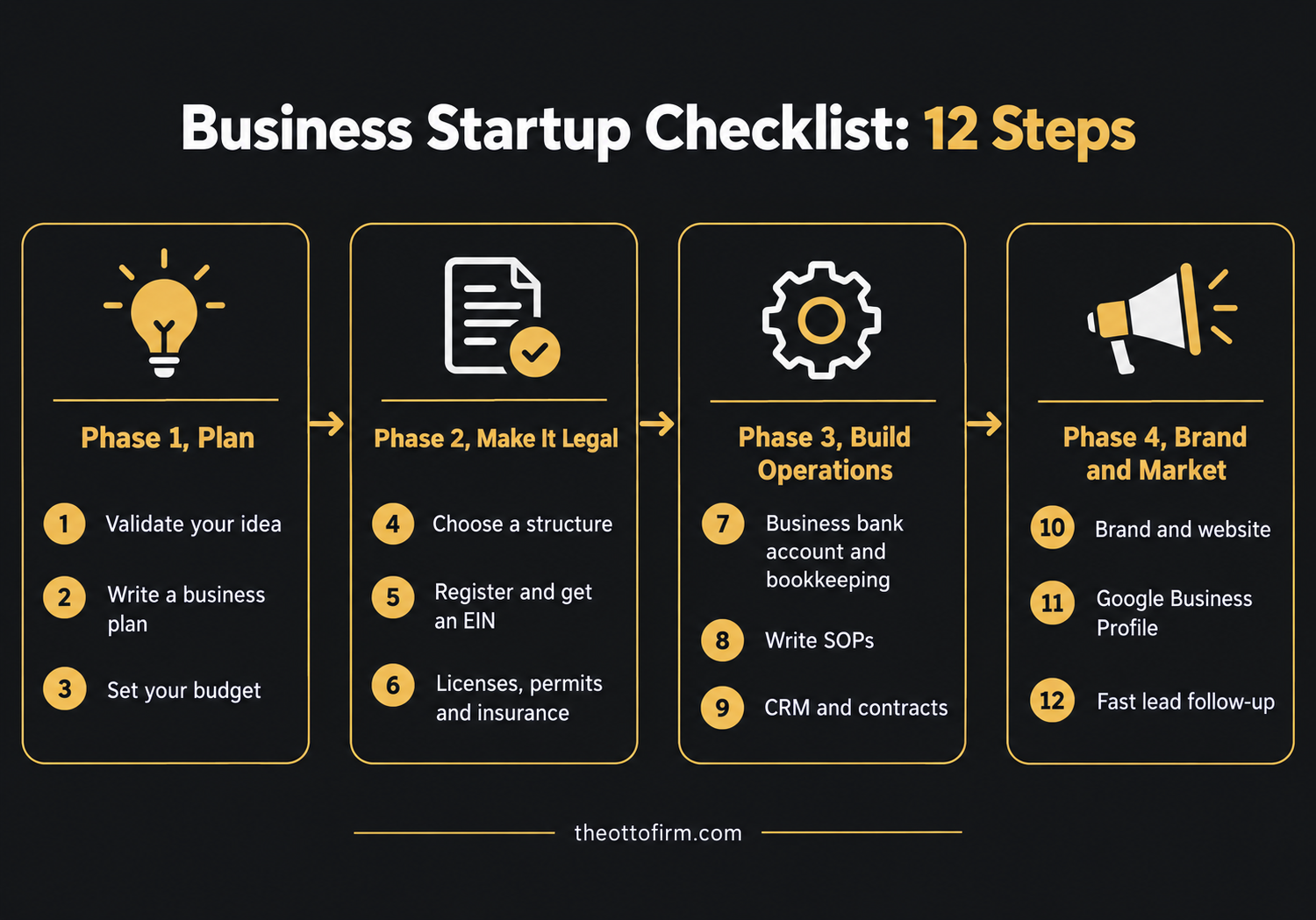
A business startup checklist fixes this. It gives you a clear order of steps, so nothing important falls through the cracks. In this guide, we break the process into four simple phases: plan it, make it legal, build your operations, and market it. Follow these 12 steps and you will launch with a real foundation, not just a hope.
Phase 1: Plan Your Business
Every strong business starts on paper. This phase is about making sure your idea can actually work before you spend real money on it.
Step 1: Validate your business idea
Before you build anything, make sure people want what you are selling. Talk to potential customers. Look at your competitors and what they charge. Check if people are already searching for your product or service online.
A simple test: can you name 10 real people or businesses who would pay for this today? If not, keep refining the idea.
Step 2: Write a simple business plan
Your business plan does not need to be 50 pages long. It needs to answer a few clear questions:
What problem do you solve, and for whom?
How will you make money?
Who are your competitors, and why will customers choose you?
How will you find and win customers?
What will it cost to run the business each month?
A clear plan keeps you focused and makes every decision after this easier.
Step 3: Set your startup budget
List every cost you expect before launch and for the first six months. Include equipment, software, licenses, insurance, marketing and your own living costs.
Then add a buffer. Most new owners underestimate how long it takes to become profitable. Knowing your numbers early helps you price correctly and avoid running out of cash.
Phase 2: Make It Legal
This is the phase many owners rush. Getting it right now protects you, your money and your reputation later.
Step 4: Choose your business structure
Your structure affects your taxes, your paperwork and your personal liability. The most common options are a sole proprietorship, a partnership, an LLC and a corporation.
Many small business owners choose an LLC because it separates personal and business liability while keeping paperwork simple. Speak with an accountant or attorney to choose what fits your situation.
Step 5: Register your business and get an EIN
Register your business name and structure with your state. Then apply for an Employer Identification Number (EIN) from the IRS. It is free, and you will need it to open a business bank account, hire employees and file taxes.
Step 6: Get your licenses, permits and insurance
Most businesses need at least one license or permit to operate legally. Requirements depend on your industry and location, so check with your state and local offices.
Insurance is just as important. General liability insurance is a good starting point, and some industries also need professional liability or workers' compensation coverage.
Step 7: Open a business bank account
Never mix business and personal money. A separate business account makes bookkeeping easier, keeps your liability protection strong and makes tax time much less stressful.
Phase 3: Build Your Operations
This is where most startup checklists stop, and where most businesses start to struggle. Operations are the systems that let your business run every day without chaos.
Step 8: Set up bookkeeping from day one
Choose an accounting tool and record every sale and expense from the start. Track your income, costs and profit each month. Clean books help you make smart decisions, stay ready for tax season and see problems before they grow.
Step 9: Write simple SOPs for repeat tasks
Standard Operating Procedures (SOPs) are step-by-step guides for the tasks you do again and again, such as onboarding a client, sending an invoice or answering a new inquiry.
SOPs save time, reduce mistakes and make it much easier to hire and train your first team member. Start with your five most common tasks.
Step 10: Set up a CRM and clear contracts
A CRM (Customer Relationship Management system) keeps every lead, client and conversation in one place. It shows you who to follow up with and where each deal stands.
Pair it with simple, clear contracts for your services. Contracts set expectations, protect your time and help you get paid on schedule.
Phase 4: Brand and Market Your Business
Your business is ready. Now people need to find it, trust it and choose it.
Step 11: Build your brand and online presence
Start with the basics: a clear business name, a simple logo, consistent colors and a short message that explains what you do and who you help.
Then build your online presence:
A professional website that loads fast, works on mobile and tells visitors exactly what to do next.
A Google Business Profile so local customers can find you, see your reviews and contact you.
Social media profiles on the platforms where your customers spend time.
Step 12: Set up lead capture and fast follow-up
Getting leads is only half the job. Following up quickly is what turns them into customers.
When someone fills out your form or calls your business, they are interested right now. If you wait hours to reply, they will often call your competitor instead. Set up a simple system:
An automatic text or email within a minute of a new inquiry.
A real call within five minutes.
Automatic reminders before every appointment.
A follow-up sequence for leads who do not book right away.
This one step can make a bigger difference to your revenue than any ad you run.
Your Business Startup Checklist at a Glance
Save this list and tick off each step as you go.
Step 1: Validate your business idea with real customers
Step 2: Write a simple business plan
Step 3: Set your startup budget with a cash buffer
Step 4: Choose your business structure
Step 5: Register your business and get an EIN
Step 6: Get your licenses, permits and insurance
Step 7: Open a separate business bank account
Step 8: Set up bookkeeping from day one
Step 9: Write SOPs for your most common tasks
Step 10: Set up a CRM and clear client contracts
Step 11: Build your brand, website and Google Business Profile
Step 12: Set up lead capture and fast automated follow-up
Common Mistakes to Avoid
Skipping the plan. Jumping straight into spending without knowing your numbers leads to cash problems fast.
Mixing personal and business money. It makes bookkeeping messy and can weaken your legal protection.
Doing everything from memory. Without SOPs and a CRM, tasks get missed and leads are forgotten.
Building a website before a message. If your message is unclear, even a beautiful website will not convert visitors.
Slow follow-up. Leads go cold in minutes, not days. A slow reply is one of the most expensive mistakes a new business can make.
Trying to do it all alone. Getting expert help early is often cheaper than fixing broken systems later.
Frequently Asked Questions
What is the first step in starting a business?
The first step is validating your idea. Make sure real customers want what you plan to sell before you register the business or spend money on branding.
Do I need an LLC to start a business?
No, but many small business owners choose an LLC because it separates personal and business liability. An accountant or attorney can help you pick the right structure.
How long does it take to start a business?
The legal setup can take a few days to a few weeks, depending on your state and industry. Building strong operations and marketing systems usually takes longer, so plan for it.
What systems does a new business need?
At minimum, a new business needs bookkeeping, a CRM to track leads and clients, simple SOPs for repeat tasks, and an automated follow-up process for new inquiries.
Can I get help setting up my business?
Yes. A business operations firm like The Otto Firm can help you build the systems, processes and marketing your business needs, so you can focus on serving your customers.
Conclusion: Start Strong, Not Just Fast
Starting a business is not about doing everything at once. It is about doing the right things in the right order.
Plan your business. Make it legal. Build the operations that keep it running. Then market it with a system that turns interest into customers. Follow this business startup checklist and you will have a foundation that supports real growth.
Not sure where your business stands? At The Otto Firm, we help business owners build the systems, operations and marketing they need to grow with confidence. Take our free Business Readiness Assessment to see exactly what is missing and what to fix first.